

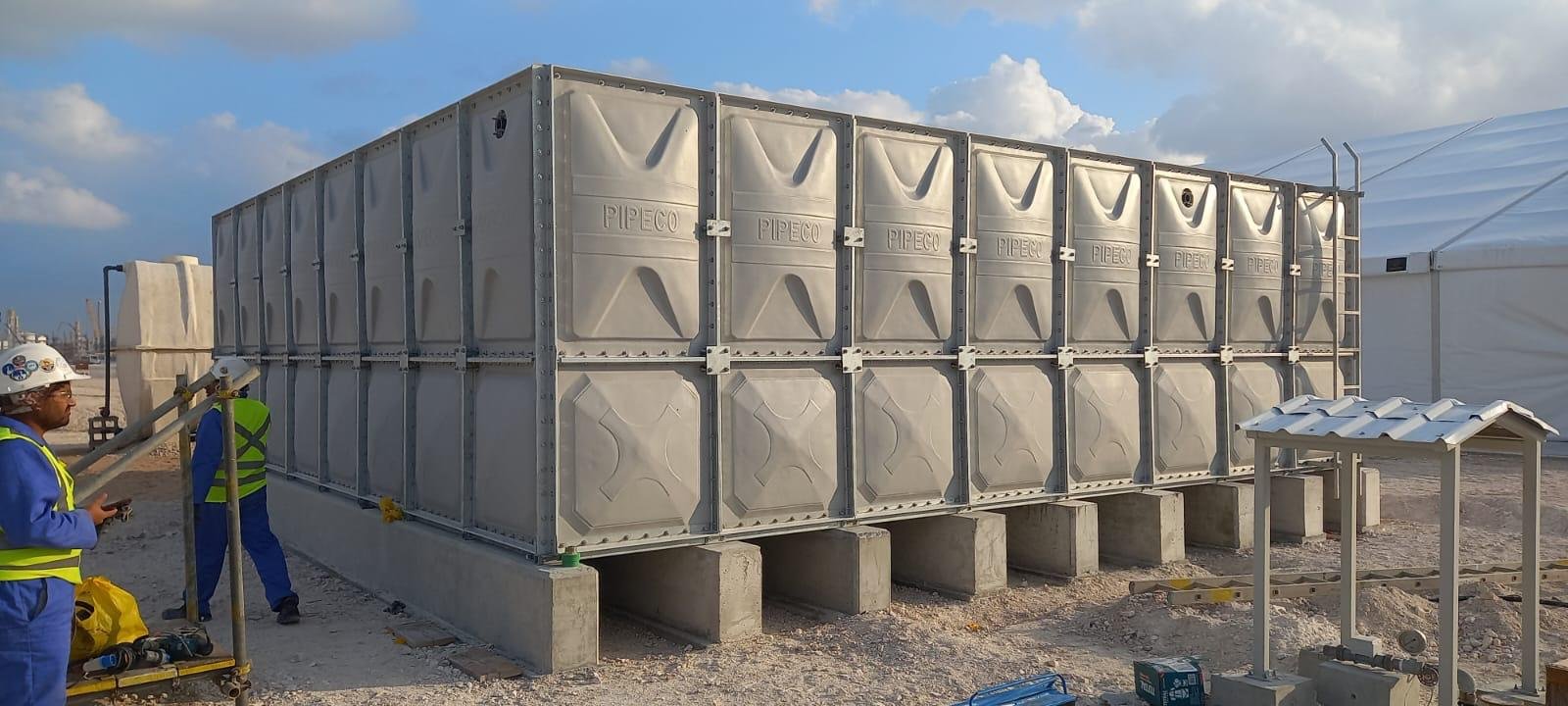
GRP Water Tanks: A Smarter Approach to Modern Water Storage
Introduction
Water storage is one of those infrastructure requirements that often goes unnoticed until reliability becomes a problem. A dependable storage system needs to handle changing weather conditions, regular usage, maintenance requirements and long-term operational demands. For commercial buildings, industrial facilities, institutions and infrastructure projects, the choice of tank can have a direct impact on water management.
GRP water tanks have become an interesting solution because they combine reinforced material construction with sectional installation. GRP, or Glass Reinforced Plastic, uses glass fibre reinforcement within a resin-based material to create panels designed for strength, durability and practical installation.
Modern sectional tanks are manufactured using controlled production processes. Pipeco, for example, describes the use of chopped fibreglass and unsaturated polyester resin, with hot-pressed SMC compression moulding used to produce the panels. The manufacturing process is designed to produce smooth, highly resistant and cured panels.
The real advantage of this approach is flexibility. Instead of treating water storage as a one-size-fits-all requirement, sectional construction allows the tank arrangement to be considered according to the project and available installation area.
What Is a GRP Water Tank?
A GRP water tank is a storage system manufactured from glass-reinforced plastic panels. These panels are assembled to create the required tank structure, with supporting components and sealing systems completing the installation.
The material combines glass fibre reinforcement with resin to provide mechanical strength while maintaining the practical characteristics associated with composite construction.
Sectional Construction
One of the most useful features of a sectional design is that individual panels can be transported and assembled at the installation location. This can be particularly valuable for projects where moving a large factory-built tank into position would be difficult.
The tank can be planned around the available space, access conditions and required storage capacity. This makes sectional construction suitable for a variety of building and infrastructure projects.
Smooth Internal Surfaces
A smooth internal surface is valuable for water storage because it can simplify cleaning and general maintenance. The construction also avoids the appearance of rough or heavily textured internal surfaces that may make routine inspection more complicated.
How GRP Construction Supports Long-Term Performance
Material selection is an important part of tank design. A storage system needs to remain structurally reliable while being exposed to water, humidity and changing environmental conditions.
GRP construction offers several characteristics that make it suitable for demanding applications.
Strength Through Reinforcement
Glass fibre provides reinforcement within the composite structure. Consistent fibre content and controlled manufacturing can contribute to uniform mechanical properties across the panels.
The manufacturing process also allows panels to be produced with different thicknesses and formed with features such as ribs, bosses and inserts.
Resistance to Environmental Conditions
Water storage systems may be installed indoors, outdoors, on rooftops or in dedicated utility areas. The surrounding environment can influence the selection of materials and protective features.
UV stabilization is another consideration. Pipeco states that its GRP panels are UV stabilized and designed to help prevent algae growth inside the tank. This feature can be particularly relevant where tanks are exposed to sunlight.
Why Tank Hygiene Matters
Water storage is not simply about holding a particular volume. The condition of the storage environment also matters.
A properly designed system should allow suitable inspection, cleaning and maintenance. Material selection, sealing components, access arrangements and installation quality all contribute to the overall performance of a tank.
Components That Support Water Storage
Depending on the design, a sectional tank can include internal stainless-steel components, external galvanized supports, GRP roof supports and non-toxic PVC sealing materials.
Pipeco specifies SS316 for several internal components that come into contact with water and identifies non-toxic PVC as the sealant used in its system. These details demonstrate why the supporting components are just as important as the main panel material.
Standards and Manufacturing Quality
When selecting a storage tank, it is important to look beyond appearance and capacity. Manufacturing standards and testing procedures provide useful information about how the product has been designed and evaluated.
Pipeco lists BS EN 13280:2001 and BS 7491 Part 3:1994 among its stated standards and identifies BS2782 as its testing method. Its page also states that the GRP panels are WRAS approved and tested by TSE for health and nutrition regulations.
Why Standards Matter
Standards help create measurable expectations for manufacturing and product performance. For a project manager, consultant or procurement team, documented specifications can make product comparison easier.
The exact certification and approval requirements should always be checked against the intended application, location and project specifications.
Where Can GRP Water Tanks Be Used?
Water storage requirements vary considerably between projects. A residential building may require a relatively straightforward supply system, while a large commercial or industrial facility may need a substantially larger storage arrangement.
Commercial Buildings
Hotels, offices, shopping facilities and other commercial properties require reliable water supplies for daily operations. A properly selected storage system can provide reserve capacity and support the building's water-management plan.
Industrial Facilities
Factories and industrial sites can have significant water requirements. Storage may be needed for process applications, utility systems, emergency reserves or general facility use.
The final specification should be based on the facility's consumption, available space, water quality requirements and engineering design.
Institutional Projects
Schools, hospitals and public buildings also depend on reliable water availability. In such locations, storage planning should consider occupancy, daily consumption, maintenance access and continuity requirements.
Installation Is Part of the Solution
Even a high-quality tank requires correct installation. The supporting structure, foundation, panel assembly, sealing, connections and access systems need to be properly planned.
Preparing the Installation Area
Before installation begins, the supporting base should be checked for level, strength and suitability for the proposed load. The surrounding area should also provide enough working space for assembly and maintenance.
For sectional systems, transportation and access planning can be easier than moving a large single-piece tank into a restricted location. However, the installation process still needs proper engineering supervision.
Supporting Structure
Pipeco specifies hot-dipped galvanized steel for external structural support and GRP pipes for roof support. Internal components are specified using stainless steel, depending on the component and application.
The support arrangement should be designed according to the tank dimensions, water load and site conditions rather than treated as an afterthought.
Maintenance for Better Service Life
Regular maintenance can help identify potential problems before they become expensive repairs.
A maintenance programme can include visual inspection, checking seals and connections, examining external supports, cleaning internal surfaces and confirming that accessories such as level indicators remain functional.
Keep Inspection Simple
A clean and accessible installation makes routine maintenance easier. Access ladders, inspection openings and water-level indicators can help operators understand the condition and operating level of the system.
The frequency of maintenance should depend on the application, water quality, environmental conditions and manufacturer's recommendations.
GRP Tanks Compared With Conventional Options
Every material has advantages and limitations. Steel, stainless steel, concrete and composite systems can all be appropriate for different projects.
GRP can be attractive where a project requires corrosion resistance, sectional construction, relatively smooth surfaces and flexibility in installation.
The Right Choice Depends on the Project
There is no universal tank that is perfect for every application. A project team should evaluate capacity, installation location, water type, structural requirements, environmental exposure, maintenance expectations and applicable standards.
This approach is more reliable than choosing a tank based only on price or appearance.
Connecting Water Infrastructure With Modern Facilities
Water storage is only one part of a larger infrastructure system. Modern construction projects often require several supporting facilities, particularly at temporary work locations, industrial sites and large development projects.
For example, a project may require a gig workers lounge to provide a practical rest area, alongside dedicated sanitation and site-support facilities.
Supporting On-Site Operations
Construction and industrial locations may require security cabins for controlled site access and monitoring. A portable security cabin can be useful where a permanent structure is not practical or where the facility may need to be relocated.
Similarly, a security cabin readymade solution can help reduce construction time when a functional site office or security point is required quickly.
A security porta cabin can also provide a flexible option for temporary projects, provided the design is selected according to the site's operational requirements.
Sanitation and Water Storage Working Together
Water storage and sanitation facilities are closely connected on many project sites. Reliable water availability can support cleaning, hygiene and daily site operations.
Portable Sanitation
Projects may use portable toilets where permanent sanitation infrastructure is unavailable. A temporary toilet can provide a practical solution during construction or short-term events.
For locations requiring easy relocation, a movable toilet can be considered as part of the site's temporary infrastructure plan.
A portable bathroom can also provide a more complete sanitation facility where basic toilet-only arrangements are not sufficient.
Planning the Complete Site
Some projects may also require a readymade toilet bathroom solution that can be installed with less on-site construction work.
The term port o potty is commonly used in some markets for portable toilet units, although product specifications and terminology can vary by region.
The important consideration is not the terminology but whether the facility provides appropriate capacity, hygiene, ventilation, accessibility and maintenance arrangements.
Making the Right Choice
Selecting a water storage system should begin with the actual requirements of the project.
Consider:
-
Required storage capacity
-
Available installation space
-
Indoor or outdoor installation
-
Water application
-
Structural support requirements
-
Environmental exposure
-
Maintenance access
-
Applicable standards
-
Required accessories
-
Installation and transportation conditions
A good specification reduces the possibility of selecting a system that is either too small for the application or unnecessarily large for the available space.
The Future of Efficient Water Storage
As buildings and infrastructure projects become more complex, water storage solutions need to be reliable, adaptable and easier to integrate into larger systems.
Composite technologies such as GRP offer an alternative approach to conventional storage. Sectional construction, reinforced panels, UV stabilization and carefully selected structural components can make the technology suitable for a wide range of applications.
The future of water infrastructure is not simply about increasing storage capacity. It is about creating systems that fit the building, the environment and the operational requirements.
Conclusion
GRP water storage technology offers a practical approach for projects that require durable, flexible and carefully engineered storage. Reinforced composite panels, sectional construction and supporting components can provide a balanced solution for commercial, industrial and institutional applications.
However, the best result comes from proper planning. Capacity, installation conditions, materials, standards, maintenance and project requirements should all be considered before selecting a tank.
Water storage may be a supporting element of a building or facility, but its reliability can influence the performance of the entire operation. Choosing the right system today can make water management simpler, more organized and more dependable for years to come.


